



How It Jeopardizes the Hiring Process and Almost Ruined the Career of an All Star
From Founder + CEO, David Nason
A History of Being Negative (A Time Travel Story)
To understand negativity bias, we need to steal a car, but not any car. We need a plutonium-fueled DeLorean. Upgraded with a flux capacitor, modified by the underappreciated genius and mentor to the one and only Marty McFly of Back to the Future fame. The incomparable Dr. Emmett Brown.
If you must travel through time to understand the impact of the ‘negativity effect,’ like we do, what better way than comfortably nestled into plush leather bucket seats in a stainless steel, four-wheeled, time bender? The answer is none, so buckle up. We’re going back in time to find out where our powerful connection to negativity began.
The evolution of the human brain has been a process of slow, deliberate progress since Homo sapiens arrived on the scene 200,000 years ago. Many advanced traits — including complex symbolic expression, art, and elaborate cultural diversity — emerged mainly during the past 100,000 years. But our modern-shaped human brains may have only come into existence about 40,000 years ago. Over, is to be highly attuned to detecting threats. 200,000, 40,000, or even 1000 years ago daily life on planet earth held different and more immediate dangers than today. Our survival required caution, avoiding risks, and worry.
For a human to survive in hostile environments, we needed to always be on the lookout. Tigers, bears, and giant reptiles on the hunt for a feeble and relatively defenseless creature kept us on our toes constantly. In fact, you and I today possess the DNA of those who survived these hardships and dangers of early life. We are the descendants of those who were best equipped to notice potential danger, limit risk, and exercise the most caution. Basically, we are the offspring of those who ran away, and who were the quickest to recognize what might be harmful. One of their key evolutionary features was an extremely powerful and well-developed threat detection system located towards the back and bottom of our brains.
It is here that our amygdala resides. Our amygdala is a significant part of our limbic system and a primary instrument in threat detection. Evolution has honed, tweaked, and tinkered with this part of our brain, turning it into an extremely fast and influential guide that keeps us safe. This brain region is incredibly efficient and works extremely well.
The amygdala is no one-trick pony, however. Beyond just a threat detection mechanism, the amygdala also plays a primary role in the processing of memory, decision-making, and in guiding our emotional responses to external stimuli. The things that activate and engage our amygdala — stimuli that are emotional and contextually rich, like threats, are immediately stored in our long-term memory. It is this process that has kept our species from extinction. Today, however, this evolutionary feature essential to our survival causes problems between humans.
A Feature or a Flaw?
Getting lost in West Memphis notwithstanding, the world is a much safer place for humanity than it was over the course of our brain’s evolution. Hans Rosling is the professor of global health at Sweden’s Karolinska Institute, author of the international bestseller Factfulness, and owner of one of TED’s most watched talks. Hans reminds us that the world has never been safer. Yet, our tendency to notice the bad more than the good significantly affects the way we see and act towards each other.
In a world relatively free of immediate threats, our fixation on looking for them is what is often described as a maladaptive strategy. Our bias toward negativity costs us dearly. It causes a mental process for evaluating information that is unbalanced, and leads us to make faulty decisions. This is especially harmful at work in hiring processes. There can also be benefits to the negativity effect, but we’ll cover that in a future article.
This problematic evolutionary feature passed down through generations into modernity by our ancestors may lead us to flawed conclusions, but there is a fix. There are 3 elements to a successful strategy to work with our brains to make great hires.
- Awareness
- Reducing heightened emotions and anxiety.
- A thorough, structured process.
Mitigation of the negativity effect begins with awareness, understanding, and a willingness to act against it. Then, lowering the stakes, by creating a comfortable environment for you and your candidates. Finally, as you will see shortly, the adoption of a structured process that accounts for our hard-wired penchant for the negative virtually eliminates the stress, chaos, and financial losses brought on by this bias.
I Need to Hire an All Star
If you don’t follow professional baseball, you may not know that 28.5% of MLB players are from Latin America. But not all locations are viewed equally. Maracay, Venezuela, is about as far from being a hotbed of Latin American baseball talent as the planet Jupiter. But the bustling city near the Caribbean Coast is as good a place as any to understand the oversized effect of negativity bias.
In 2006, José Carlos Altuve dominated the Venezuelan National Baseball Championship. Combining a rare blend of speed, power, and grit, Altuve’s talent and determination won him the admiration of fans, competitors, and teammates in their march through the national tournament.
After the championship’s completion, José set his sights on the major leagues. Step one in his quest was to become an international signee once he turned 16. But when his 16th birthday came and went with no team calling him, he made his way to the home of the Houston Astros Baseball Academy in Guacara, 37 miles east around Lake Venezuela.
On the first day of their open workouts, the academy coordinators slimmed down the roster size from 50 potential players to 20. José was not on the list of 20 who would return the next day. Told he wasn’t good enough to continue, Altuve steamed as he packed his bags and headed for home.
The best player of the national championship went unsigned and was now cut on the first day of workouts as a free agent. How could this be? He could hit. He was fast, and possessed incredible bat speed and strike zone awareness. His baseball resume sparkled. What then was causing 30 major league teams to miss out on the fact that when it came to playing baseball, José could do the job exceptionally well?
Our evolutionary negativity bias is problematic in hiring for many reasons. Baseball scouts, and hiring managers alike, look for negative qualities and features of a candidate before considering abilities. They also assign a higher value to attributes they view as negative than they do to positive attributes. And to make things more troubling, our fixation on the negative is happening both consciously and unconsciously.
It is common practice for decision makers to go into an interview looking for the proverbial ‘chinks in the armor’ of a candidate. In some ways, this is sensible. You don’t want to miss or ignore ‘red flags.’ This disposition to uncover what is wrong with a candidate, combined with the fact that by nature we will assign a higher value to a negative than a positive, can sabotage our ability to choose the best candidate for the job.
In our research, hiring managers report that the negativity effect seems to pop up most readily from visual triggers. They share stories of physical attributes, mannerisms or behavior, what someone was wearing, etc. From the 6’3” well-dressed candidate wearing a Rolex who looked like a VP of sales gets hired. The candidate whose child walked in the room during a Zoom interview is “disorganized” and unprofessional. That well-dressed candidate failed, costing the company millions in sales and a 6 figure lawsuit. That unprofessional candidate went on to significant success at a different employer.
In José’s case, nobody wanted to sign a player only 5’5” tall. José’s diminutive frame — not his skills, not his accomplishments, and not his ability to play ball — is what left him unsigned and eventually cut and sent home.
A Numbers Problem
Visual triggering of negativity bias is one way this troublesome phenomena rears its ugly head, but it is not the only way. The number of stakeholders, interviewers, or agents involved in making a selection decision is also a factor.
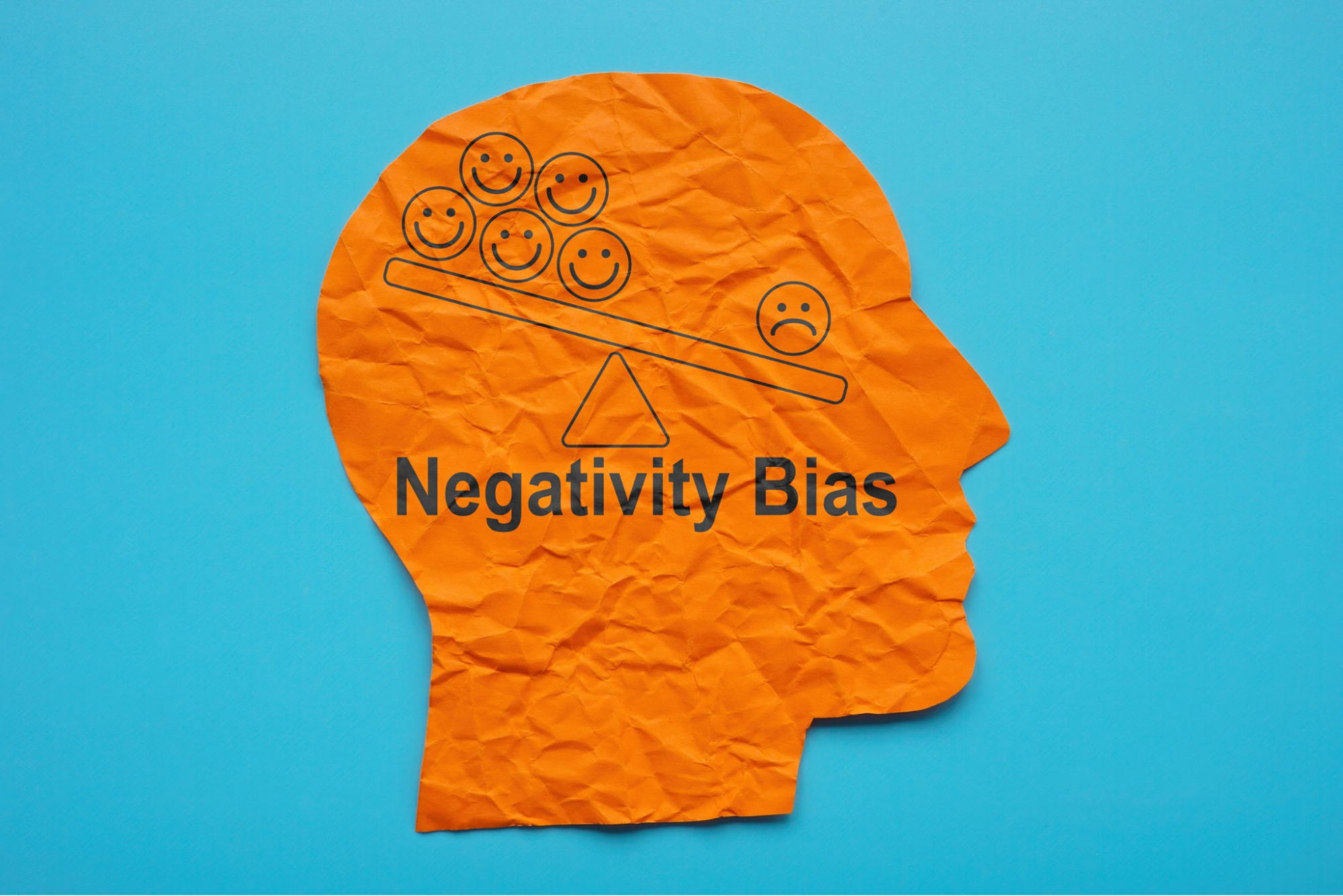
There is an expression in the wellness industry regarding negativity bias. It goes, ‘for every negative thought, we require five positive ones to balance the scale.’ And while there is some debate on the numbers, there is little question regarding the fact that a negative is far more resonant in our minds than any positive attribute one might uncover during the selection process.
Imagine a hiring scenario where four stakeholders are present for an interview. Each one of these people denotes one negative feature of a candidate. It would then take a combination of twenty positive attributes to ‘even the scale.’ You see the problem here. Because each person is out to find something wrong with the potential employee, the result of the negativity effect becomes exponential. In this common scenario, negativity bias has become an unmanageable monster.
In José’s case, a negative bias about his size clearly influenced the collective consensus of the staff managing the academy, and seemingly no amount of positive skills could bring the scales back in balance.
After traveling home and speaking with his father, José, determined to prove the coaches wrong, returned to the academy the next day. Upon entering the ballpark, a security guard stopped him. “The guard wouldn’t let me in,” Altuve recalled to USA Today Sports. He said, “You’re not a player. I got a son the same size as you, and he’s 8 years old.”
Negativity Lingers
Involving too many people in a hiring decision increases the odds of negativity bias, but that’s not the only issue. Negativity also has staying power.
The third factor that exacerbates negativity bias is time. One challenging aspect of negativity bias is that we remember negative things more and for a longer duration of time than positive things. The longer an interview process lasts, and the number of interviews increases, the probability of success declines steadily.
Think about the negative situations you have encountered in your life. When these instances occur, the power and speed of your amygdala instantaneously moves the experience into your long-term memory as protection against a future recurrence. It stays with you for your ‘protection.’ The negative event will linger with a greater resonance than any positive memory. Thus, in the course of an interview process, the further away you get from the interview itself, the positive attributes you uncover will fade much quicker than negative ones. In our studies on the time-to-hire and time-in-interview processes, candidates who initially scored very high marks were later declined based on ‘negatives’ that were initially assigned low or little value. Comments like “I initially thought that was no big deal, but now that I’ve had time to reflect, I don’t think they’d work well with the team,” are commonplace.
Beyond the Negativity We See
A visual trigger might be an easier example of the influence of the negativity effect, but there are many other factors that contribute to its influence on the choices we make. We find the source of these other factors both in our internal landscape and in the external world in which we live.
The environment can dramatically influence the impact of negativity bias. Both our present and past environments influence how we assess situations. When interviewing candidates, our mood, the influence of our colleagues and friends, the media we consume, and past work or school experiences will all influence our susceptibility to the negativity effect.
Dr. John Bargh is one of the world’s leading experts on the unconscious mind. In his 2017 tour de force, Before You Know It — The Unconscious Reasons We Do What We Do, Dr. Bargh shares how easily our unconscious mind guides our behavior without our conscious consent or awareness. He outlines the pervasive influence external stimuli can have on our actions without our conscious recognition. This can play a crucial role in poor hiring decisions.
Some of us share a greater predisposition for the negativity effect than others. We could argue that the reason it presents itself in an interview process is a reflective quality held by the interviewer. The way an individual is oriented, perceives the world, or the emotional state of a hiring manager can all dramatically shape the outcome.
So imagine the emotional state of the Astros baseball academy staff when, after slipping past the security guard, they saw José suiting up for training, determined to prove them wrong, the day after being told to go home.
Mitigation Strategies for Balancing Negativity
Indignant at the audacity of this pip squeak, claiming to be a ballplayer, the staff of the academy told José to go back home. “I just want a chance,” José said. “I will show you I can play.”
Wolfgang Ramos, a long time scout and a coordinator at the academy, intervened. He told José to finish suiting up and to get out on the field while pacifying the rest of the coaching staff. Ramos saw something in José he liked, and he understood the value of perspective and the importance of bringing calm to heated and emotional situations. He also called Al Pedrique.
To minimize the impact of heightened emotions, whether in hiring situations or elsewhere, it is important to have a structured process in place that you can rely on. One that accounts for any cognitive or physiological response that prevents balanced and deliberate decision-making. One that will provide consistent and predictably better outcomes by mitigating bias.
The Stakes and the State
Hiring and interviewing is fraught with opportunities for elevated emotions. This is true for both hiring teams and candidates. In our research, hiring managers don’t always report that they feel any heightened state of anxiety or fear during an interview process, but their brains and bodies tell us differently. There is a significant amount of pressure to get a hire right. Failure to do so not only comes with a financial cost and wasted time, but a reputational cost as well.
Hiring is also a rife with complexity. This often results in having to make crucial decisions under stress. These conditions set the scene for an overactive amygdala, leading to a spike in our cortisol levels from our threat response. Without instruction, our breathing becomes shallower, our pupils dilate, and the function of our prefrontal cortex slows. This exacerbates the issue as our threat detection system is heightened and leaves us vulnerable to negativity bias. All of this ends up contributing to poor success rates in hiring, and the increased attrition rate numbers companies report year after year.
This is most evident during the first interaction between a candidate and an interviewer, and makes sense when you consider the evolution of the human brain. When in a new environment and meeting new people, especially a high stakes situation like a job interview, your emotional reaction to that situation is going to be elevated. Essentially, the old and powerful parts of your mind will be on high alert, screaming ‘where’s the danger? Where’s the danger?’ As a byproduct of this response, we become reliant on heuristics to do our thinking for us, and that is how the negativity effect interjects itself into the process.
Turning Negativity Around
Wolfgang Ramos turned the negativity faced by José around by providing space and time for him to play, while alleviating the responsibility the other coaches felt for José’s potential failure on the field. Ramos lowered the stakes.
A thorough process that can account for negativity bias’ harmful effects begins long before any interviews are undertaken. When facing the opportunity to hire a new employee, the most important first step is to thoroughly evaluate what you are trying to accomplish by hiring someone. We’ll cover more of this in a future article, but it’s incredibly helpful to know.
How effective a hiring plan is depends on its design. How well it’s designed has to do with choice architecture. The architecture clarifies what a hiring manager will pay attention to, what they will ignore, what to look for, and what positive or negative attributes will have to be accounted for and verified. The design needs to support the desired outcomes for the open position and enable the interviewer and candidate to feel respected, supported, and free of any heightened emotional taxation.
The major league baseball scouting process follows a design created dozens of years ago. While it is arguably thorough, the choice architecture is faulty, leading to scouts choosing players based on certain criteria that may or may not be requirements to solve for skill deficits on the team. Ramos knew this very well, and understood that managers often make emotional decisions. By lowering the emotional state of the managers and coaches, Ramos gave them the opportunity to evaluate him based on his skills and abilities.
An All Star Is Born
When Wolfgang Ramos called Al Pedrique to talk about José, there was no mention of José’s height. Ramos was already keenly aware of how it had affected the other evaluators at the academy, so during their conversation about the unsigned second baseman who kept showing up uninvited, Ramos knew it was better left unsaid.
Pedrique, who at the time was the Astros Latin American coordinator, had a long and varied career in baseball. Pedrique’s mentor, Andres Reiner, was a legendary scout in Latin American baseball circles. He had taught Pedrique many lessons, both about baseball and about life. But the one that made all the difference in Pedrique’s career as a talent evaluator, and had a massive influence on the yet-to-be career of a young man from Maracay was, “to never exclude anyone at first glance.”
Yet that is often exactly what happens when we let negativity bias overly influence our decisions. We evaluate candidates from a disproportionately negative perspective. If we’re not aware, and not careful, we can allow this natural tendency to make us misjudge a candidate’s abilities. This incurs a substantial cost that is entirely preventable.
By developing an awareness of the features of the negativity effect and acting through a structured and supportive system, better hiring decisions are made with great consistency. A structured process enhances the intuitive processing power of our subconscious mind and deliberate analysis.
Unlike 29 other Major League Baseball Teams who let a negativity bias against size cloud their evaluation of the one of the best amateur players in Venezuela, the Astros, thanks to the calm and unbiased observations of Wolfgang Ramos and Al Pedrique, found 15,000 dollars to sign José Altuve. Their wherewithal to recognize how easily negativity bias can cloud our judgements, and their ability to overcome its insidious effects, allowed them to make one of the shrewdest amateur signings in baseball history.
José Altuve has gone on to win four Silver Slugger Awards; a Rawlings Gold Glove, was the American League MVP in 2017, named to the American League All-Star Team seven times, and is still one of the most productive and exciting players in Major League Baseball. The Astros organization has nothing negative to say about that.
Notes: